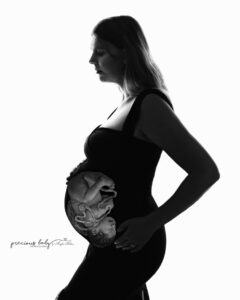
I published this article in August 2017, the year before the Referendum whether to legalise abortion in Ireland. Receiving pushback, I took it down. I have now decided to stand up for what I believe in and to re-publish an edited version. I re-structured my narrative, updated sources and added pictures of the amazing photographer Angela Forker. My point of view and the overall content of the blog post remain unchanged. (25/09/2025)
Pregnancy – Miracle and Burden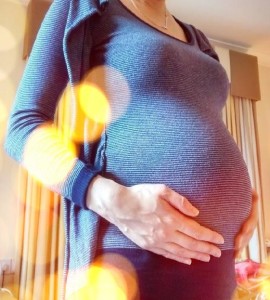
To listen to the heartbeat of your unborn baby for the first time is a very special moment. I am grateful I was able to experience that myself last year. It felt like a miracle to me. Hard to get your head around that you have created a tiny human who is now growing inside you for nine months.
I am aware that there are women who don’t see it that way. Women in difficult circumstances, facing an unwanted pregnancy. At the wrong time, with the wrong, or no partner by their side. In financial troubles or suffering from depression and self-doubts. Do these women get the right to have an abortion? Is it their choice alone, and if so, up to what time of gestation?
Questions that people in Ireland are publicly debating at the moment. Pro Choice supporters demand to repeal the 8th Amendment of the Irish Constitution that currently protects the life of the unborn child. To keep it, and therefore abortion in Ireland to remain illegal, is the goal of the Pro Life Movement.
Does Demand justify Supply?
Thousands of Irish women travel to Great Britain every year to have an abortion. In the UK it is legal to abort a baby up to the 24th week. About 1 in 5 pregnancies end in an abortion (Source: loveboth.ie). In 2016 British hospitals recorded 3989* abortions of women with an Irish or Northern Irish address. However the actual number is likely to be higher since patients don’t always give the right contact details, or might seek an abortion in another country.
The true reason for an abortion is hard to determine. Most pregnancy terminations are filed under statutory ground C, and more specifically a potential, mental risk to the the mother, if she continued the pregnancy (Source: Department of Health, UK). Pro Choice supporters argue that women shouldn’t be forced to travel for an abortion. They claim that women have the right to their own body and call for the introduction of legal abortion in Ireland. Does demand justify supply in this case? Should it be allowed to end an unwanted pregnancy because an average of 12 women per day* are looking for an abortion in Ireland?
Your Body, Your Choice
Your body, your choice. A line people throw around a lot these days, proclaiming the right to your own body. But is it really a woman’s body only that is concerned when it comes to abortion? An unborn baby’s heart starts beating about the same time as an early pregnancy test can detect a pregnancy – at five weeks. By the time the pregnancy is confirmed, a new life has already been created. A woman is therefore not only deciding over her own body, but is making a decision for her unborn baby, whether to give him life or not.
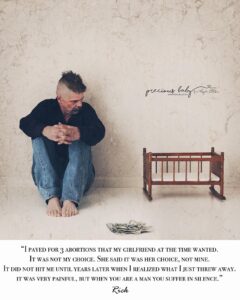
Lacking support of partners might often be a reason to seek an abortion. Nevertheless, there are men out there who want to see their children grow up. What about their opinion? Do women get the right to discard the father’s vote entirely and go through with an abortion against their will, because it is their choice alone? If not the right of the fetus to life, the right of the father to his children should take the “Your body, your choice argument” off the table. Nobody should claim the right to end life because it is not wanted at that particular point in time, nor judge whether a life is worth living. And who decides when life starts in the first place?
Abortion Deadlines
That leads me to another controversy around abortion. Why, how and who introduced a widely accepted abortion deadline of up to 12 weeks? We have already established that a baby’s heart starts beating around week five. Major organs are under way by week eight including brain, lungs, kidneys, and gut beginning to function. Impulses are coordinating first facial expressions and limb movements by 12 weeks. The baby can even suck his thumb at this stage. We can see through ultrasound that a 12-week old fetus looks like a human in miniature, and research suggests that he might even be susceptible to pain. Considering this, how can abortion be a legitimate option?
“It is only a clump of cells” is an argument I have heard many times. That makes me wonder if people are even aware of the developmental stages of a fetus at the legal abortion deadline of most countries? If they were, how can abortion at 24 weeks be legal under any circumstances, when it would be considered murder outside the womb? What makes the legal difference between a woman in despair before giving birth and after, when all that has changed is the baby’s location? To me abortion deadlines seem random. Introduced to allow abortion in the first place, but certainly not based on medical facts concerning the unborn.
No Harm done

Giving the unborn a voice and supporting Pro Life against abortion in Ireland is important to me. However it often equates to being “against women” or their rights. I strongly disagree. Whilst I advocate for the baby’s life, I think it is equally important to consider the mother’s circumstances and needs. I believe offering psychological and physical support is a better approach than throwing abortion at a crisis in which an unwanted pregnancy is often only the tip of the iceberg and not its root cause.
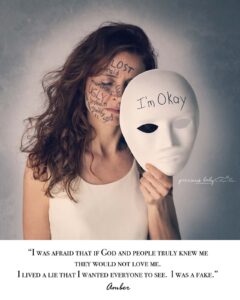
An unexpected pregnancy can surely cause a crisis and turn one’s life upside down. But so can abortion. Whilst the medical procedure seems simple (yet cruel) enough, I think the mental impact on women is underestimated. Often women feel shame, regret, guilt or even denial after an abortion. The American Photographer Angela Forker powerfully portraits abortion stories providing a beautiful way of acceptance and healing.
The procedure and impact of abortion are cruel on the unborn and women alike. How tempting the thought of simply “reversing” an unwanted pregnancy might be, abortion is no simple method where women walk away relieved and happy. Particularly not after learning about how abortions are performed and what happens to the fetus during it.

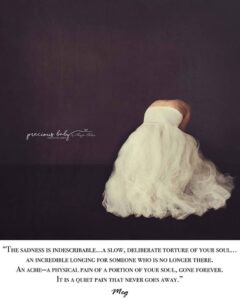

I owe it to my Child
In May 2017 I became a mother for the first time. I was lucky to have a pleasant pregnancy and all the support I needed. And yet I felt a huge responsibility for my unborn baby. I wasn’t able to do as I pleased anymore, but had to take care of myself in order to take care of my baby. No stuffing my body with junk food whenever I felt like it. No after work drinks or cigarettes breaks. I stopped playing hockey even though I had just trained super hard to be on the local team. Eventually I wasn’t able to exercise much at all anymore as my immobility increased with my bump. Last but not least I gave up on my favourite sleeping position as I couldn’t lie on my ginormous bump anymore.
Did I have the occasional caffeine dose or chocolate binge? Of course! Did I always do everything by the books? Of course not! Did I have doubts about the pregnancy at times and fear to become a mother? Certainly! At the time I probably thought I could do better, but in hindsight I am proud for always trying my best.
Protect what we created
Even after our boy was born I had days when I struggled. No matter how much we loved him and how much he was wanted, reality as parents is hard. Trying my best and reminding myself that I owe it to him helped me to overcome challenges. Wanted or unwanted, babies are not a commodity we can acquire to make us happy, nor get rid off if we feel overwhelmed.
Whether we have chosen to put life into the world or the choice was made for us, the baby certainly cannot be held responsible either way. Hence they should not be the ones to suffer, but be protected, nurtured and looked after to the best of our abilities. All the decisions we make should be at their best interest. Therefore the most important one has to be the decision pro life. And against abortion in Ireland, as well as anywhere else.